Welcome back, Readers!
I am excited to revive P.S. Just Learning — a blog that ebbs and flows with the gravitational pull of my adventures in K-12 education. In 2014, my first blog entries washed up from my experience as an elementary school classroom teacher serving advanced learners. Later, posts rose from my experiences as a school assistant principal and gifted education coordinator. Since 2020, when I stepped out of the school setting to serve as Executive Director for the Illinois Association for Gifted Children, my writing shifted to other venues creating blog slack tide.
In 2022, the winds again shifted; this time, to the “wild.” Currently, I am privileged to work with K-12 teachers at an area zoo, where I lead a professional learning program. Here, I learn something new about wildlife and conservation every day. Or something new about science. Or something new about teaching and learning from the diverse and talented educators I encounter.
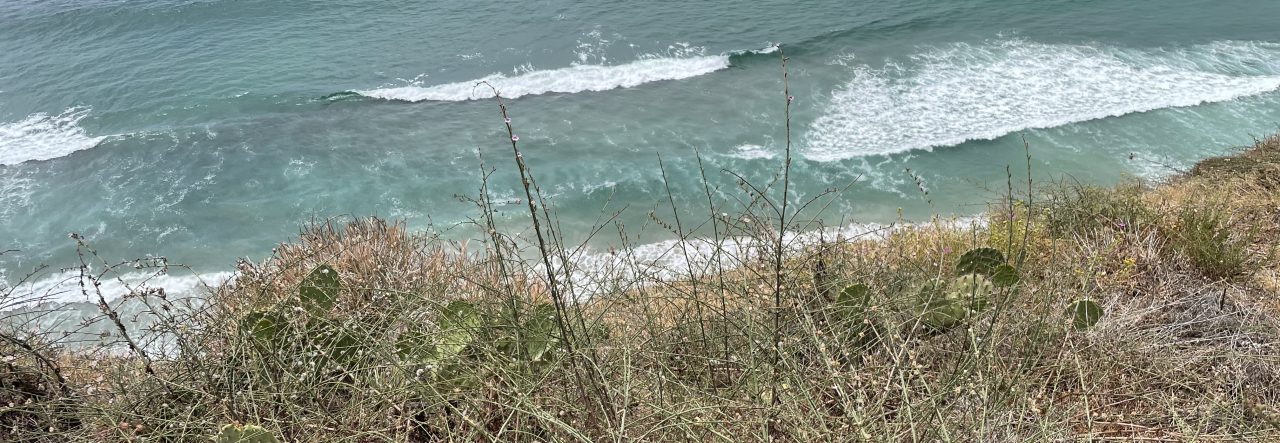
My journey in education has washed me up on the shore of informal learning environments.* In these places, I’m discovering an ocean bursting with life. – where just off the beach, diverse vegetation thrives in sandy soil, and vibrant blooms abound. I’m lingering here — in an oasis of zoos, museums, libraries, parks, nature preserves, sidewalk crevices, kitchens, and backyards — where observation, exploration, and play ignite curiosity.
Where does this captivating world of informal learning begin and end? Who needs a map?
Not me. The tide is high.
Time to drift outside and ride the waves.
In the coming months, I hope you will tumble with me toward an unchartered shore – an ecosystem in dynamic balance. Just Learning. For everyone.
*According to the National Research Council report Learning Science in Informal Environments: People, Places, and Pursuits, there are three categories of informal learning environments:
- everyday informal environments (such as watching TV; reading newspapers, magazines, or books; searching online; playing educational computer games; having conversations; pursuing one’s hobby; or volunteering for an environmental cause)
- designed environments (such as museums, science centers, planetariums, aquariums, zoos, environmental centers, or libraries)
- programs (such as 4-H programs, museum science clubs, citizen science activities, and after-school activities).
See: Schweingruber, H. A., & Fenichel, M. (2010). Surrounded by science: Learning science in informal environments. National Academies Press, p. 2.

–P.S. Just Learning
 P.S. Just Learning